🎓
AFTER HIGH SCHOOL
Five doors. All of them real.
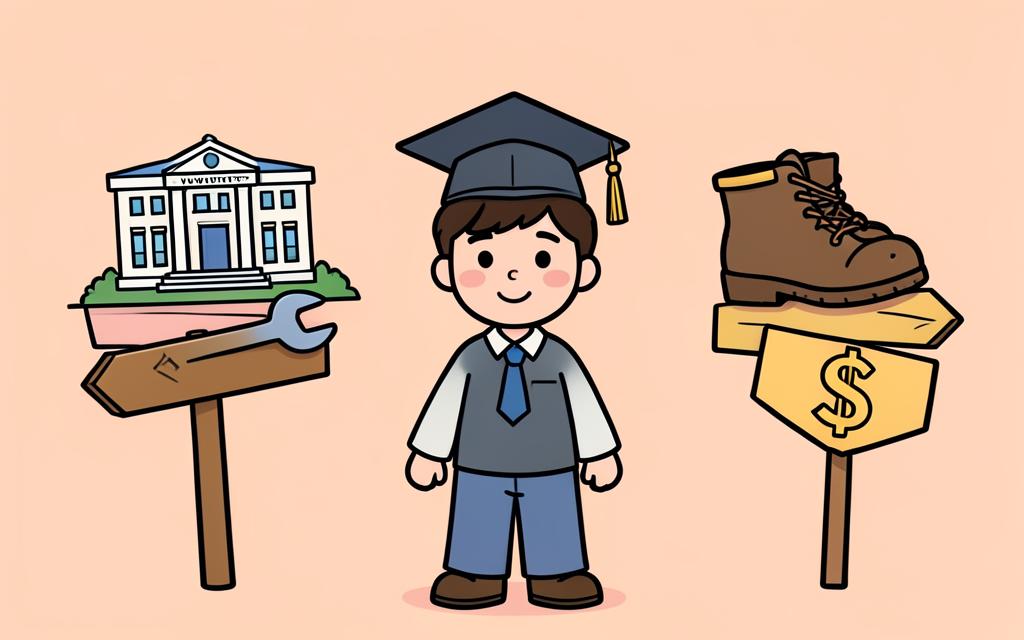
College, trade school, military, apprenticeship, work.
THE THINGS TO KNOW
four ideas that cover most of it
01
University
Four+ years, the most expensive door. Worth it when the career requires the degree — run the debt against the likely starting salary before you commit.
02
Trades & apprenticeships
Electricians, welders, plumbers: earn while you learn, finish with zero debt, and many out-earn degree jobs within a decade.
03
Military
Pay, housing, training and college money — in exchange for a binding commitment of years. Read everything before you sign anything.
04
Community college & direct-to-work
Two-year degrees and certificates are the cheapest on-ramp to many careers. Working first is also a plan — especially with a budget and a next step.
WHAT IF A BABY COMES FIRST?
sometimes parenthood is the plan — here are your real options
About 1 in 6 young women and many young men become parents before 25. It doesn't end your options — it changes the order. Here's what actually works.
👶
Work + childcare support
A full-time job while using childcare assistance programs (many states cover most childcare costs for young parents). Slower, but steady money from day one.
Hardest on sleep, fastest on income.
🏫
School part-time, on campus childcare
Many community colleges offer on-campus childcare and teen-parent programs. Two classes at a time still finishes — just on a longer timeline.
Slower degree, but the degree still happens.
🔧
Paid apprenticeship
Earn while you train — trades like electrician, plumbing and HVAC pay from week one, with no student debt. Flexible hours vary by employer.
Good money by year two, no debt.
🏠
Family or co-parenting support
Living with family or sharing parenting duties cuts the biggest costs — childcare and rent — and buys time to finish school or training.
The single biggest money-saver available.
🤝
Programs that exist for exactly this
WIC (food for mom + baby), Medicaid/CHIP (healthcare), SNAP (groceries), childcare subsidies and teen-parent high school programs. Millions of parents use these — that's what they're for.
Using help is a strategy, not a failure.
🧮
The honest math
A baby costs roughly $2,800/month with full-time childcare. Most 18-year-old jobs pay $1,800–$2,500/month. That gap is why the other five options exist — nobody does this alone.
Run the Baby Audition before you need it.
Keep going
WHERE TO NEXT
NEXT
Try it in an Audition
Make the decision in a safe scenario before it costs you out there.
Start an auditionNEXT
Go deeper in a Life Lab
Full walkthroughs of money, career, relationships and the Mind Room.
Open Life LabsNEXT
Ask the awkward question
Anonymous questions answered by reviewed adults, not commenters.
Ask Backstage